Propulsion / CADCreoAssembly ModelingMechanical DesignProduct DevelopmentPrototype Development
Pulse Detonation Engine — Bachelor's Final Project
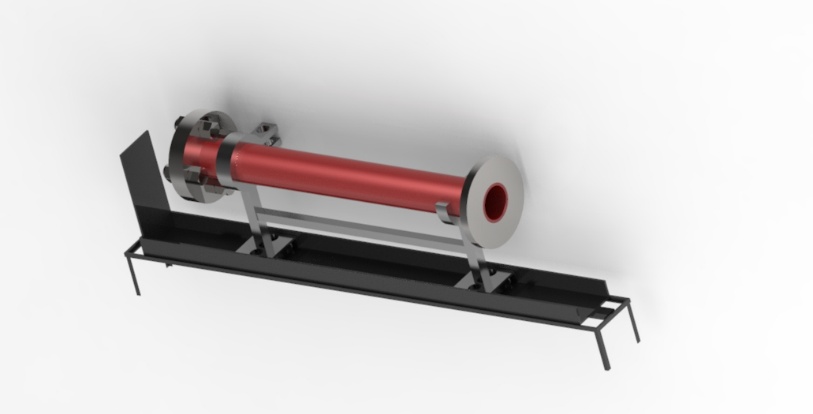
Design and CAD-model a small-scale Pulse Detonation Engine (PDE) prototype as my Bachelor's final-year project, as part of a five-member team.
A pulse detonation engine has to route fuel, oxidizer, and ignition hardware through a compact assembly that can survive repeated detonation cycles, while remaining simple enough for a student team to fabricate and assemble.
As the team member responsible for mechanical design and CAD, I designed the complete assembly in Creo, developed the 3D CAD model to a fabrication-ready level, selected appropriate materials for the components, and produced realistic renderings to communicate the design intent to the rest of the team.
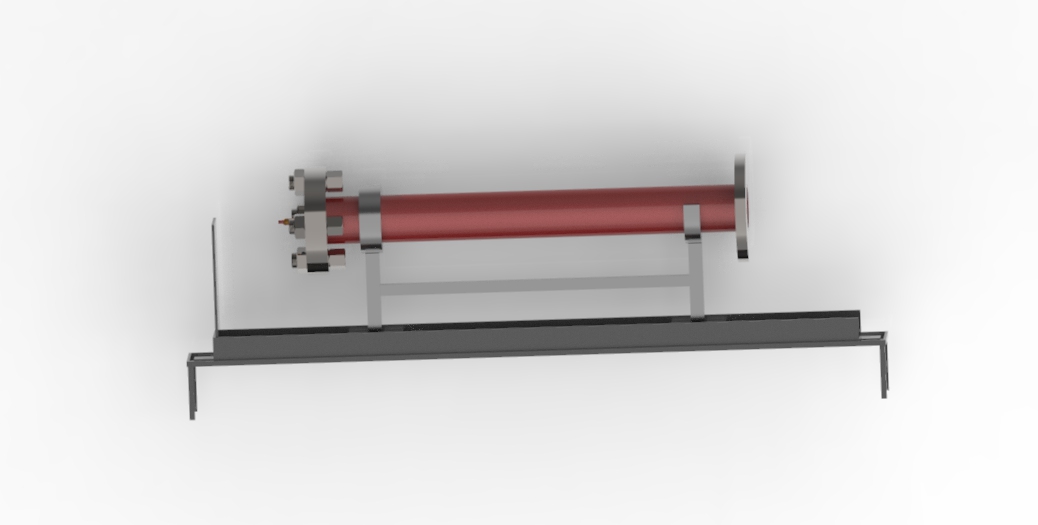
Complete PDE assembly modeled in Creo, including the detonation tube, valve and ignition mounts, and supporting structure, detailed for fabrication.
Design reasoning was supported by theoretical analysis of combustion cycles and propulsion efficiency rather than full CFD, consistent with the scope of an undergraduate capstone project.
Applied thermodynamics and fluid dynamics principles to size the detonation tube and estimate propulsion performance during the concept phase.
Prioritized a design that balanced propulsion performance with what the team could realistically fabricate and assemble on a student budget and timeline.
The design was successfully manufactured, and the prototype was assembled and demonstrated in real life.
Materials were selected for the detonation tube and structural components based on thermal and mechanical demands of repeated pulse combustion.
Combustion-cycle and propulsion-efficiency reasoning guided the geometry, validated in practice by the working, demonstrated prototype.
Designing an assembly that could survive repeated detonation cycles while staying simple enough for a five-person student team to fabricate on a fixed timeline.
Completed a fabrication-ready CAD model and full assembly for the team's PDE prototype.
The prototype was successfully manufactured, assembled, and demonstrated in real life.
Validated the overall design and functionality through physical demonstration.
This project was my first experience carrying a design from concept through to a working physical prototype, and it shaped how I think about designing for manufacturability from day one.