Composite SimulationANSYS ACPCATIAComposite Laminate ModelingThermal AnalysisResidual Stress
Spring-back Analysis of Composite Materials
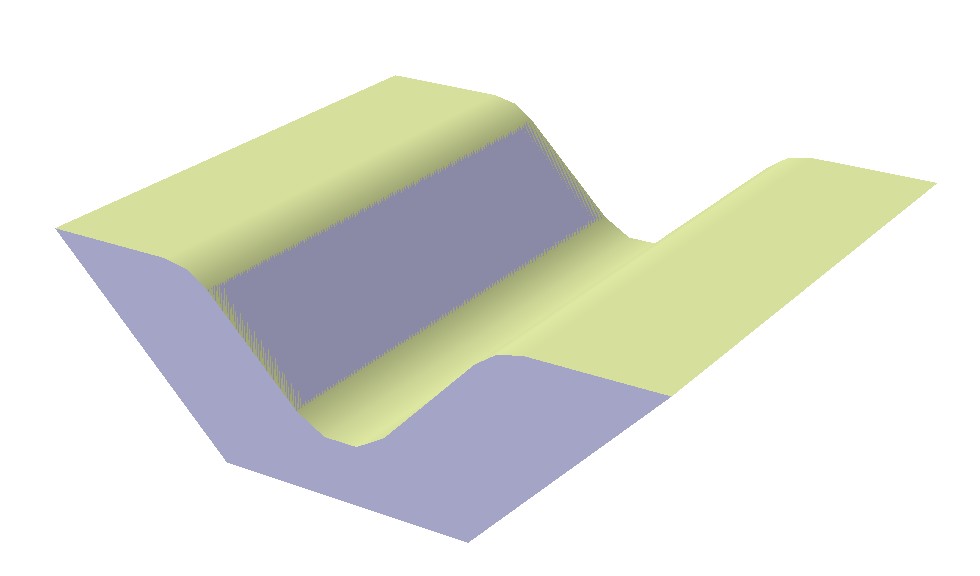
Develop a simulation framework to predict springback deformation in carbon-fiber composite laminates after manufacturing, and investigate how mold material and laminate cure state influence residual stresses and dimensional accuracy.
Composite parts often spring back after demolding due to residual stresses generated during curing and cooling. These dimensional distortions reduce manufacturing accuracy, increase rework, and raise production costs — and there's limited practical engineering guidance comparing the combined effects of mold material and cure state.
I designed a V-shaped CFRP laminate and mold geometry in CATIA, then created the composite layup in ANSYS ACP (Pre) using a [0°/90°/90°/0°] stacking sequence to accurately represent laminate behavior. I built a finite element workflow in ANSYS Workbench combining a transient thermal analysis of the curing cycle, frictional contact between laminate and mold, and a static structural analysis to predict springback after demolding. I then simulated four manufacturing scenarios — steel vs. composite molds, each in cured and uncured laminate conditions — and compared total deformation, directional deformation, stress, and strain across all four.
V-shaped laminate and mold geometry modeled in CATIA, sized to represent a realistic composite tooling scenario.
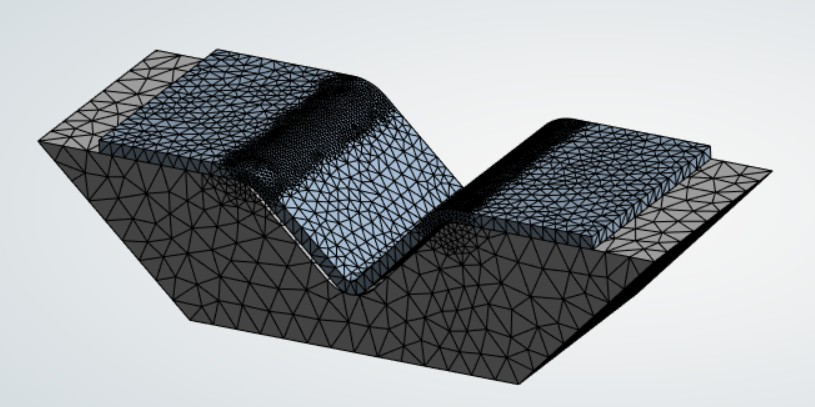
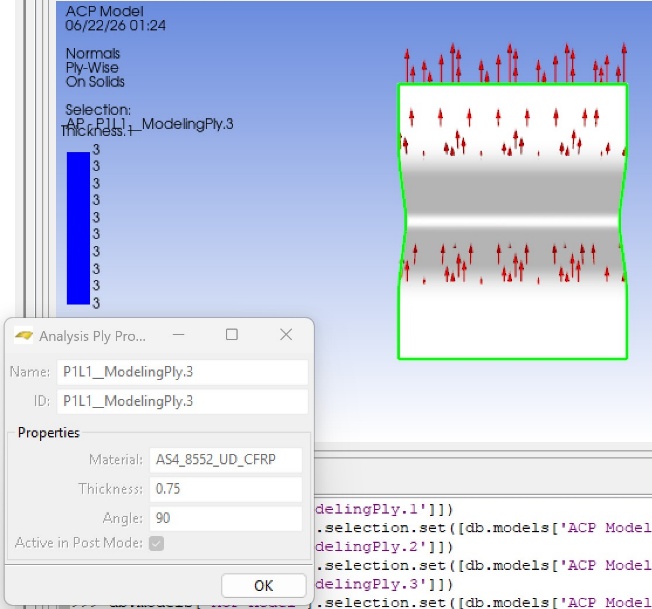
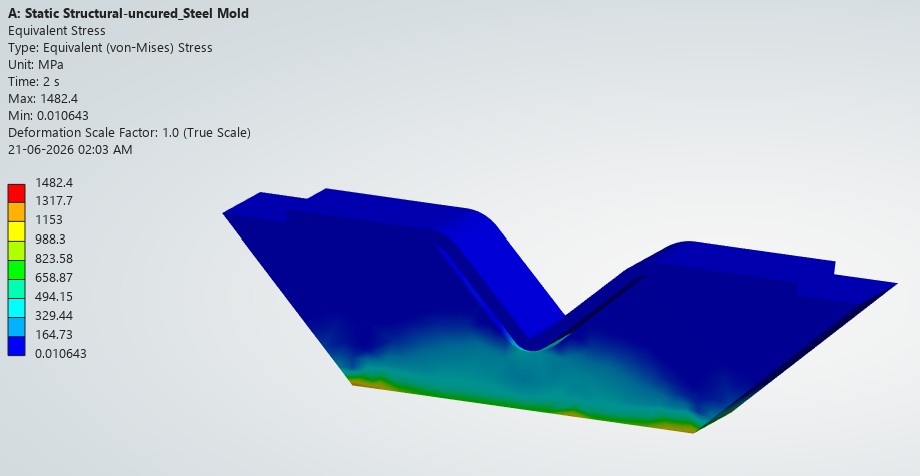
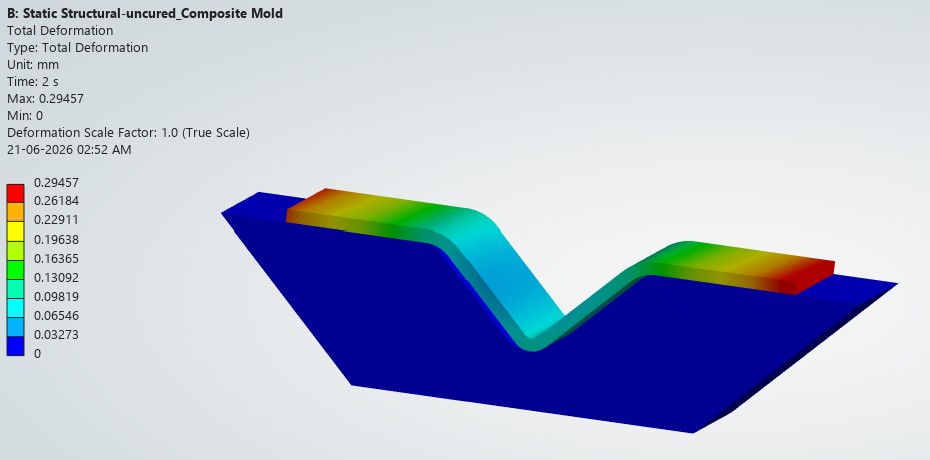
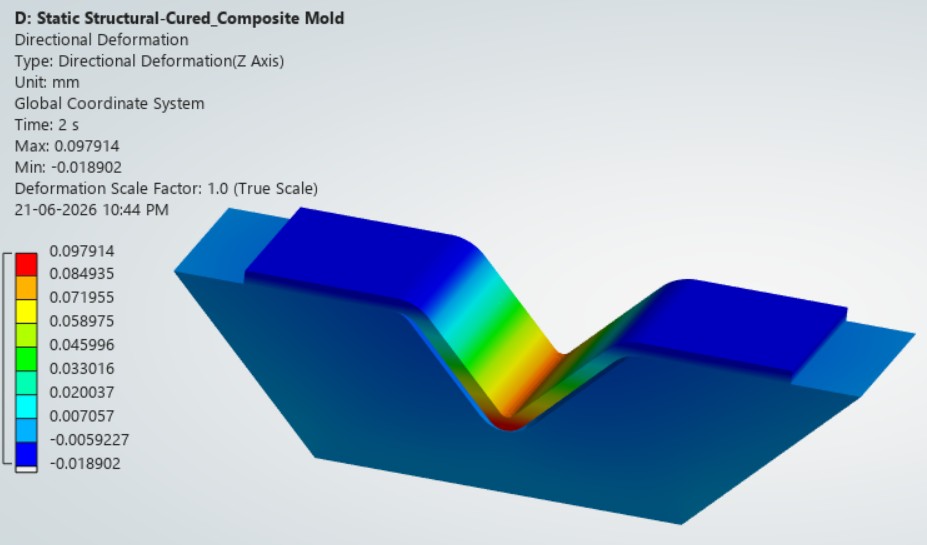
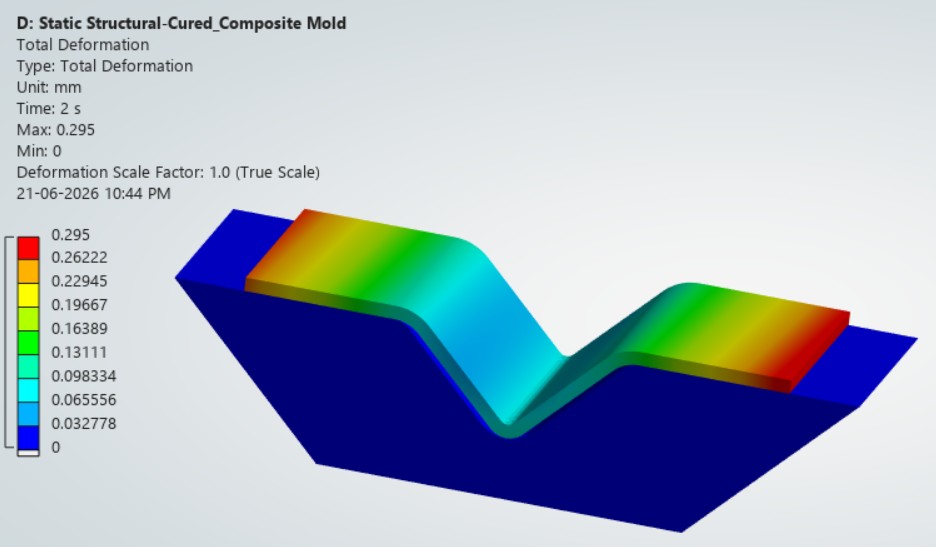
Coupled transient thermal + static structural FE workflow in ANSYS Workbench, with composite layup defined in ANSYS ACP (Pre) and frictional contact modeled between laminate and mold.
Compared total deformation, directional deformation, stress, and strain across the four scenarios to isolate the individual and combined effects of mold material and cure state.
Selected a [0°/90°/90°/0°] stacking sequence to represent a realistic structural laminate, and modeled frictional (rather than bonded) contact to capture more physically realistic mold-release behavior.
The workflow was built specifically to support tooling design and process optimization — predicting springback digitally rather than through physical trial-and-error.
CFRP laminate compared against steel and composite mold tooling, across cured and uncured process states.
Quantified how mold material and laminate cure state each influence deformation and residual stress, providing clear insight into dimensional stability during composite manufacturing.
Isolating the individual effects of mold material and cure state on springback, which required a coupled thermal-structural workflow rather than a single-step static analysis.
Built a complete simulation workflow capable of predicting springback without relying on physical prototypes.
Quantified the individual and combined effects of mold material and cure state on deformation and residual stress.
Demonstrated that FE simulation can meaningfully support tooling design and reduce manufacturing trial-and-error for composite components.
This project deepened my understanding of process-induced deformation in composites — a class of problem that sits right at the intersection of manufacturing and structural analysis, and one I want to keep working in.