Aerospace StructuresCATIAANSYS MechanicalFEAMaterial SelectionComposite Design
Materials Selection, Structural Analysis & Fabrication of a UAV Wing
Design and optimize a lightweight UAV wing by evaluating different structural materials to achieve the best balance between stiffness, weight, structural integrity, and manufacturability.
High-aspect-ratio UAV wings are prone to bending and torsional deformation under aerodynamic loading. Choosing the wrong material can add structural weight, reduce stiffness, or cause excessive deflection and poor flight performance — and the design also has to be manufacturable.
I evaluated four candidate materials — Carbon Fiber, Fiberglass, Aluminum, and PLA — using three engineering material-selection techniques: Ashby chart screening, the Performance Index method, and Multi-Criteria Decision Making (MCDM). I then built a 3D CAD model in CATIA and ran structural simulations in ANSYS Mechanical: static structural analysis to compare deformation and stress under aerodynamic loading, and modal analysis to determine natural frequencies and verify dynamic stability. Based on the results, I selected an optimized hybrid wing structure with CFRP spars, CFRP skins, and lightweight ribs, then built a scaled prototype using carbon-fiber wet layup, vacuum bagging, 3D-printed molds, and laser-cut internal ribs to validate the manufacturing process.
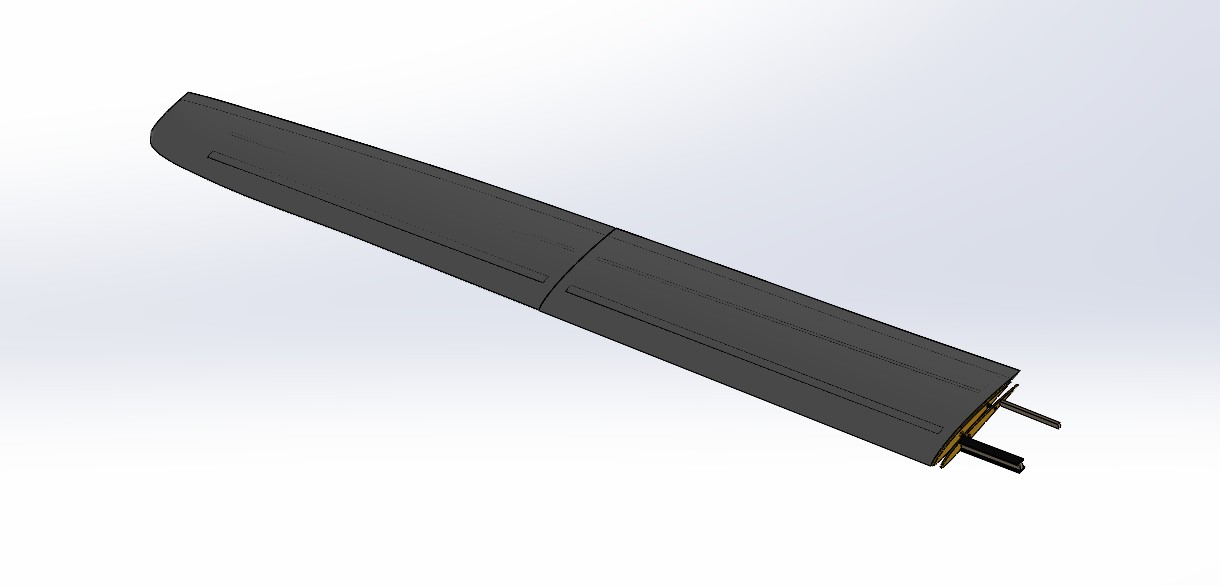
Full UAV wing CAD model built in CATIA, detailed for both simulation and downstream fabrication (mold and rib geometry).
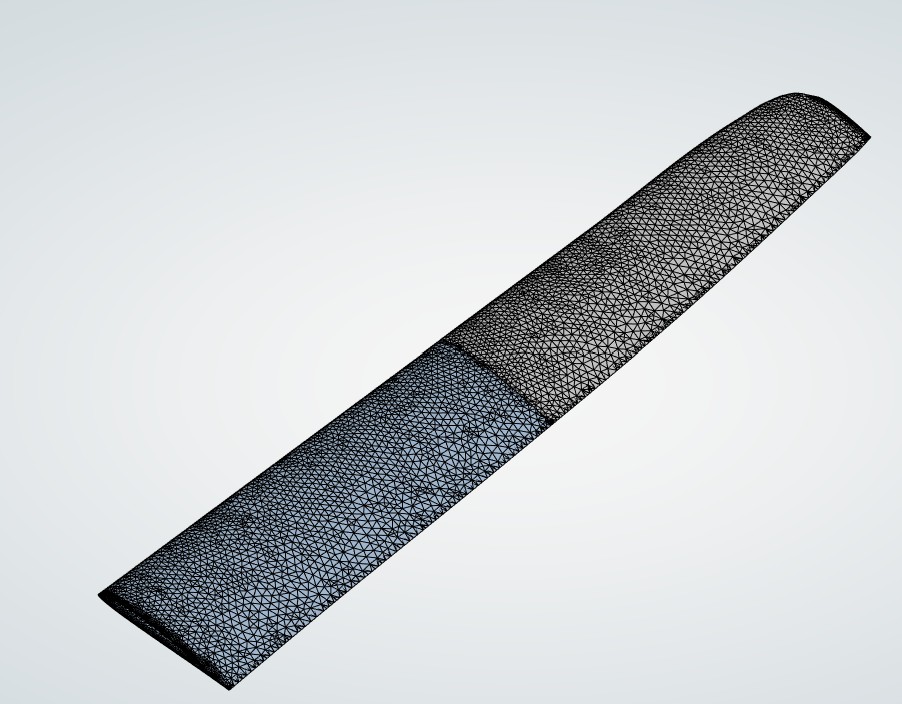
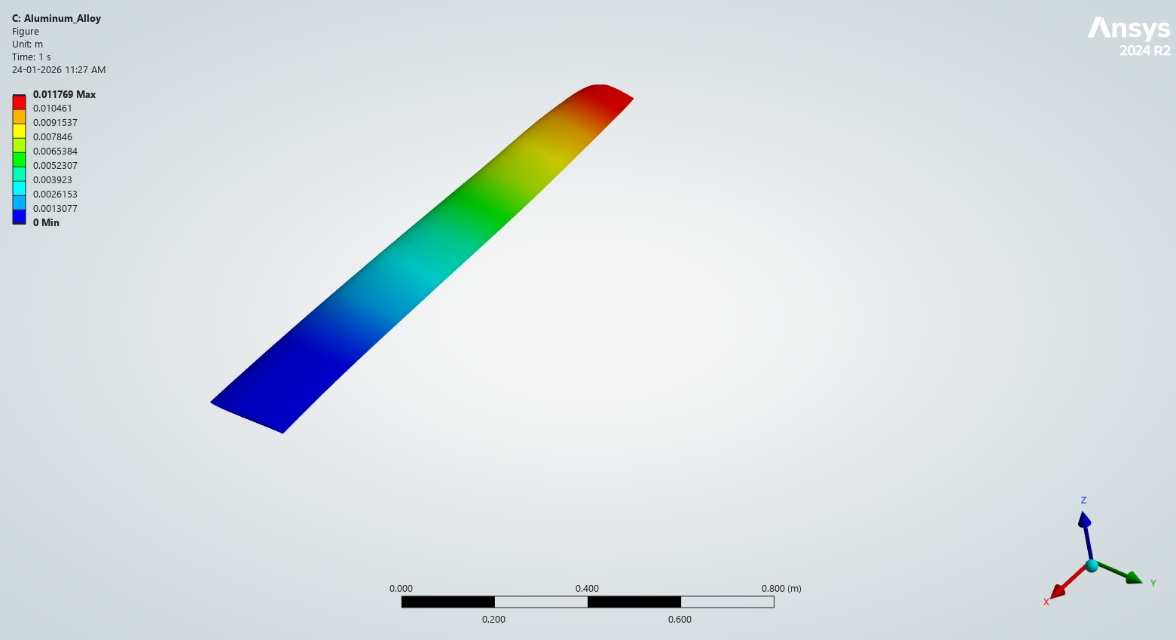
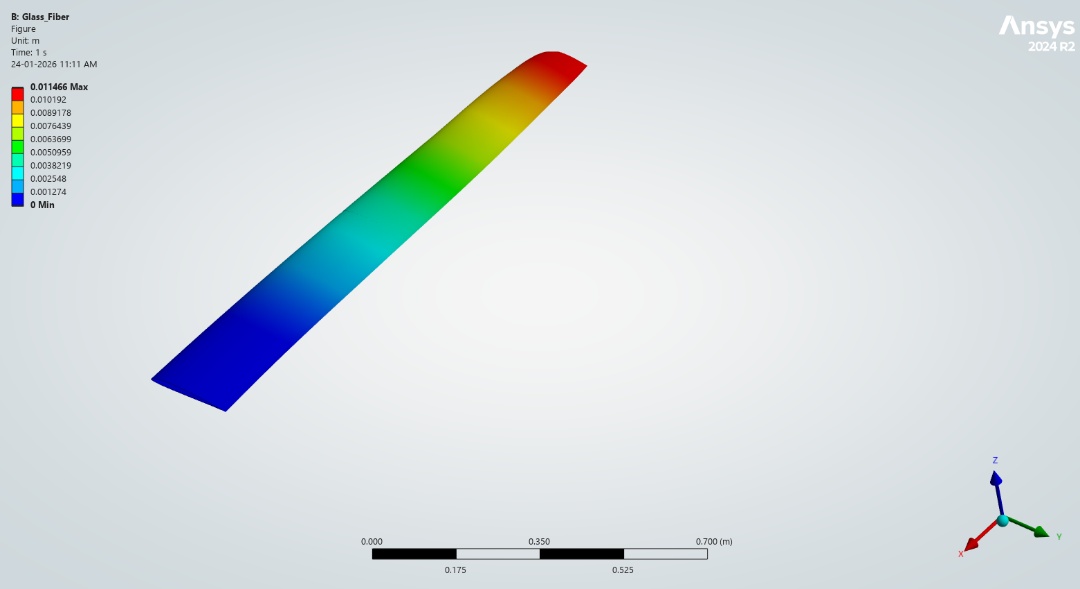
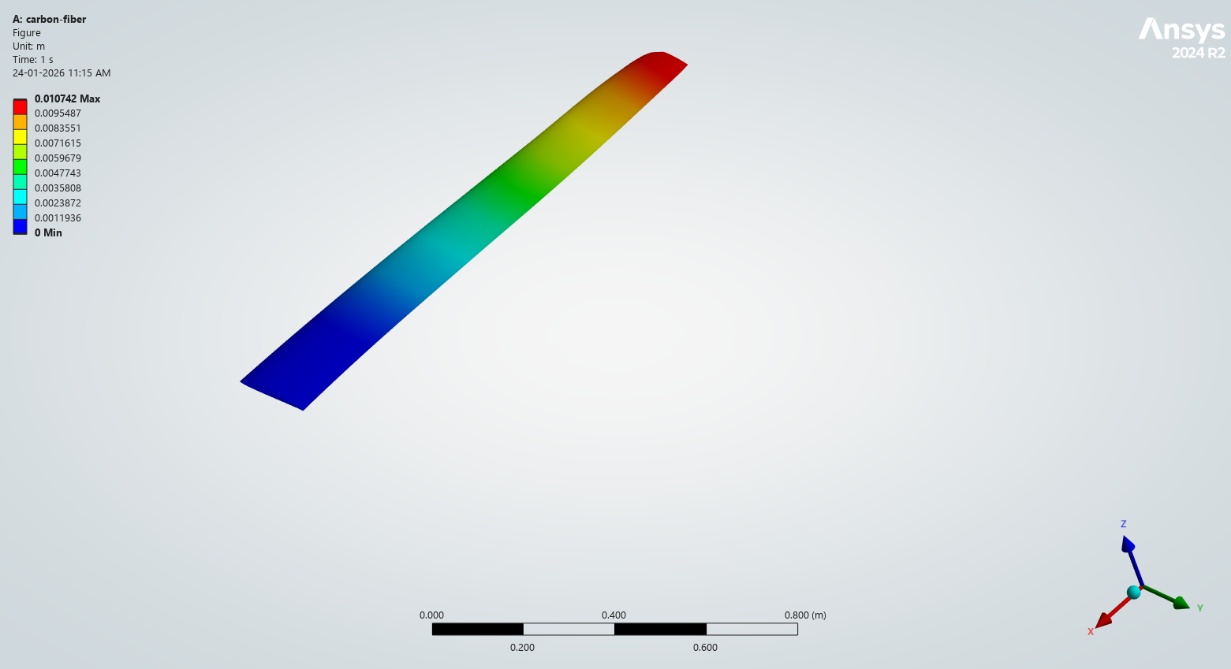
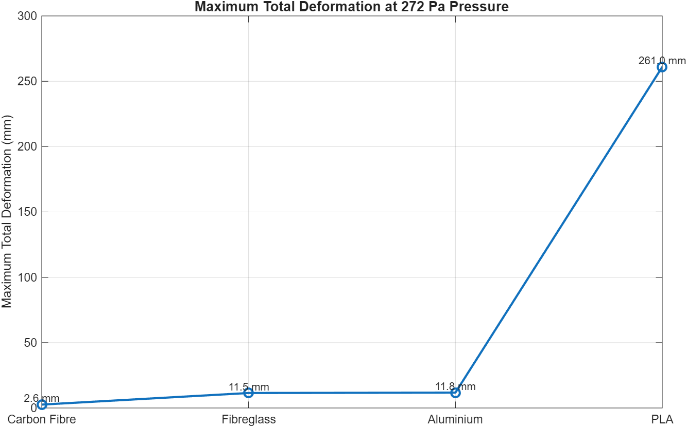
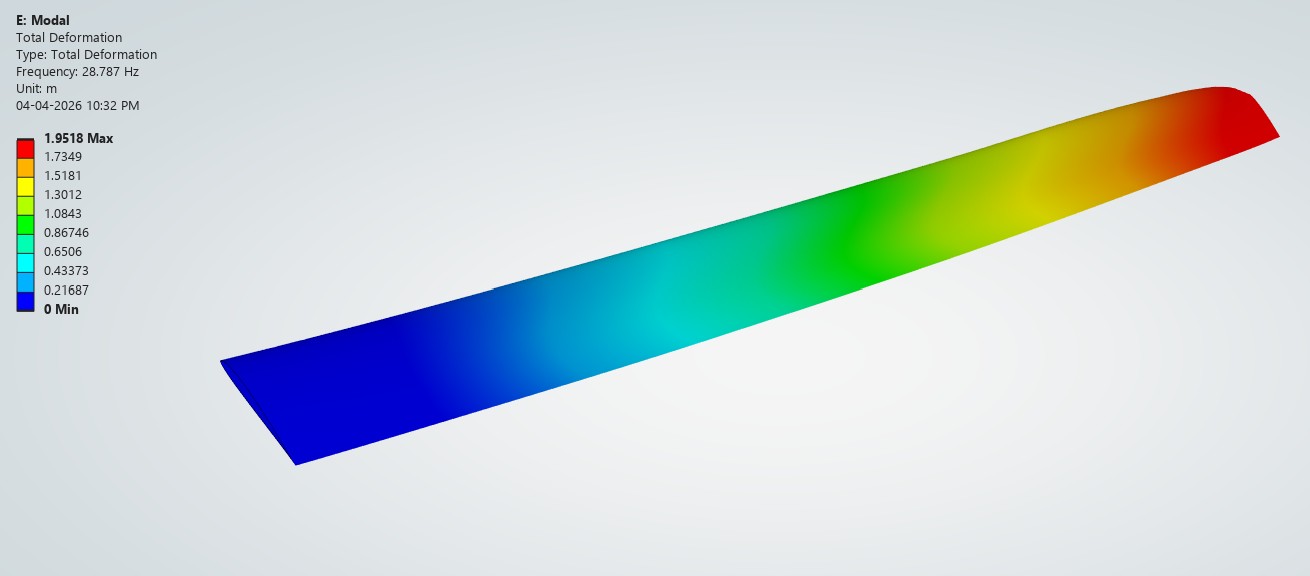
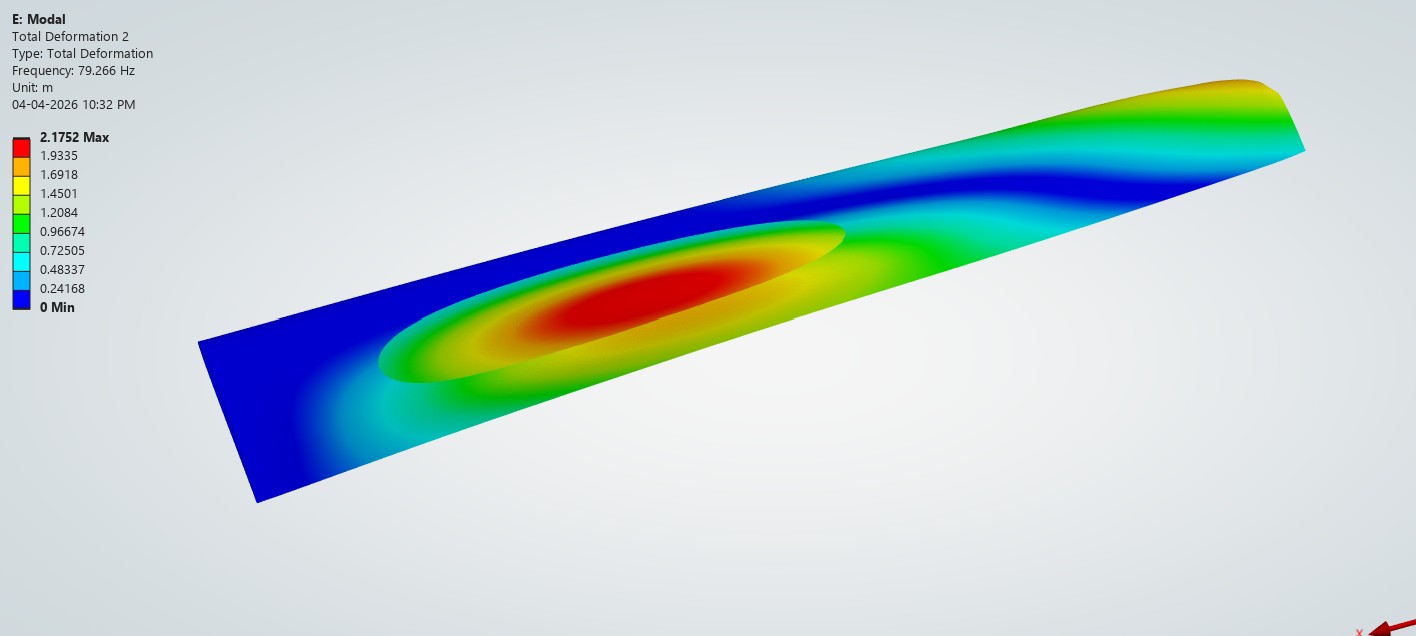
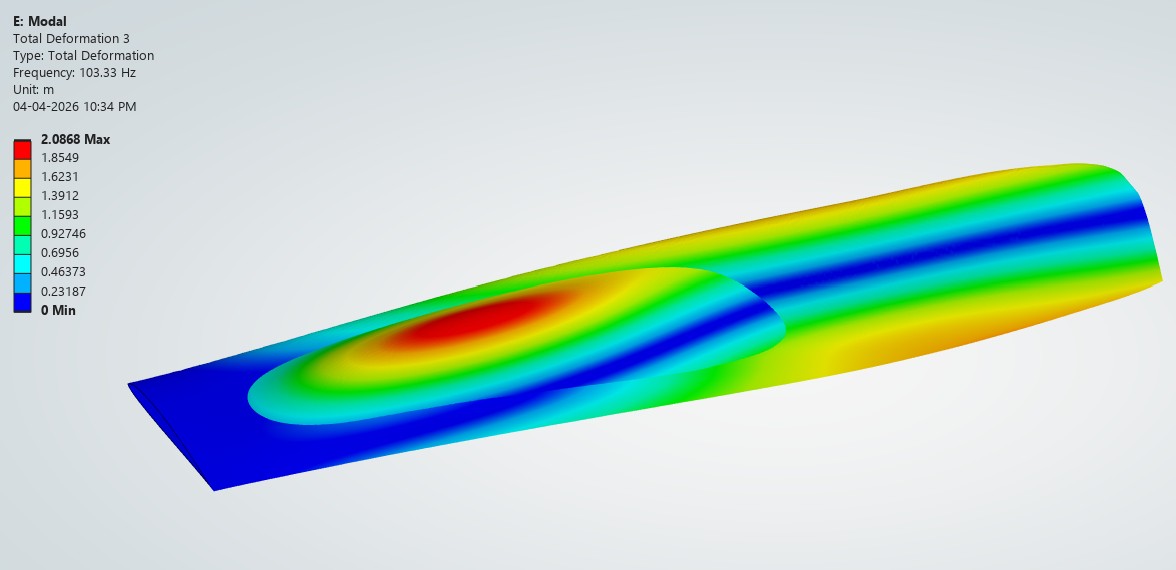
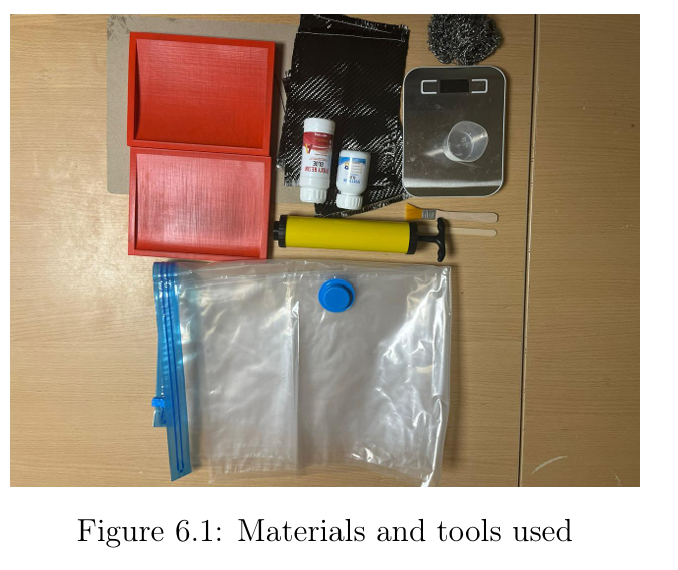
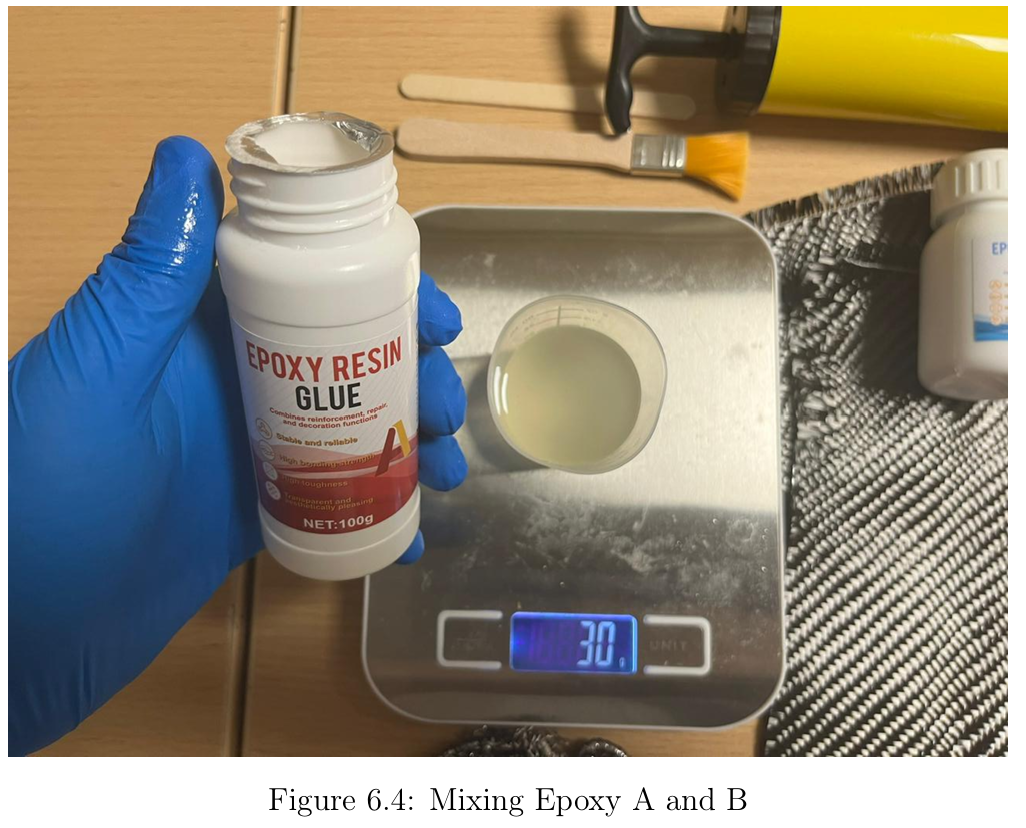
Static structural FEA to compare deformation and stress across all four material candidates, plus a modal analysis in ANSYS Mechanical to extract the first six natural frequencies.
Applied Ashby chart screening, the Performance Index method, and MCDM scoring to rank material candidates before committing to detailed FEA.
Selected a hybrid structure — CFRP spars and skins with lightweight ribs — after confirming carbon fiber's advantage held up across all three material-selection methods and the FEA results.
Built a scaled prototype using carbon-fiber wet layup and vacuum bagging over 3D-printed molds, with laser-cut internal ribs, validating that the optimized design could actually be manufactured.
Compared Carbon Fiber Reinforced Polymer (CFRP), fiberglass, aluminum, and PLA across stiffness, weight, and manufacturability.
Modal analysis identified three governing mode shapes: Mode 1 (bending — maximum deflection at the tip, the primary structural response to aerodynamic loading), Mode 2 (torsion — twisting about the longitudinal axis, important for flutter and lift-distribution behavior), and Mode 3 (coupled bending-torsion, relevant to aeroelastic stability). CFRP showed the lowest wing-tip deformation of the four materials tested.
Comparing four structurally and economically different materials on equal footing, then proving the FEA-favored choice could actually be manufactured — resolved by carrying the winning material through to a physical prototype.
Identified Carbon Fiber Reinforced Polymer (CFRP) as the optimal material through all three material-selection methods.
Achieved the lowest wing-tip deformation — 10.7 mm — under identical loading conditions, dramatically outperforming PLA (261 mm) while maintaining strong stiffness-to-weight performance.
Verified favorable dynamic characteristics through modal analysis, with natural frequencies that reduce resonance risk in operation.
Successfully fabricated a composite prototype, validating both the design methodology and the manufacturing workflow.
This project tied together material selection theory, FEA, and hands-on composite fabrication in one workflow — it's the project that best represents how I like to work: analytical rigor validated against something built by hand.